

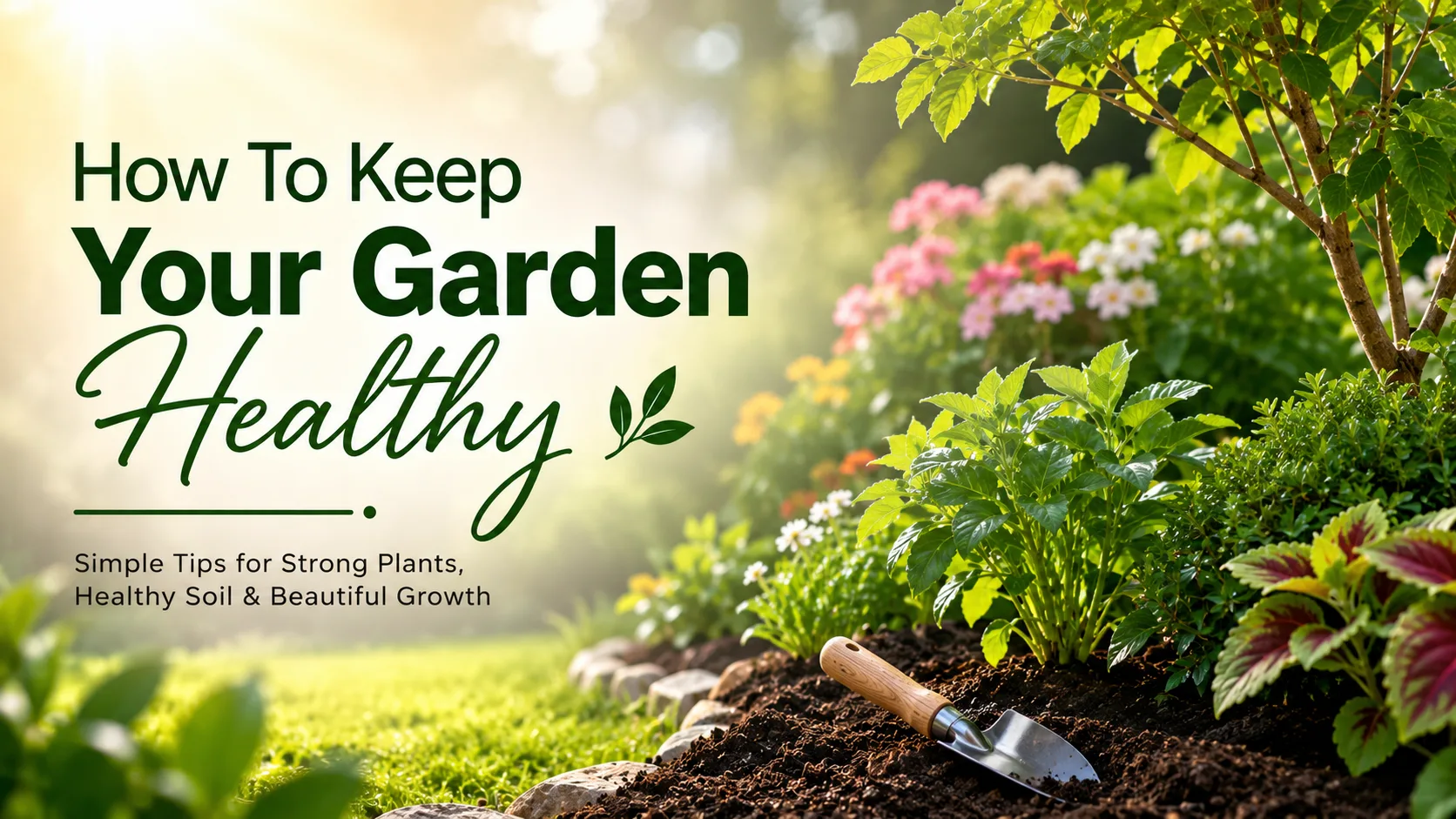
A healthy garden is more than a collection of green plants—it is a living ecosystem where healthy soil, adequate water, sunlight, air circulation, nutrients, and regular care work together. Whether you maintain a small balcony garden, a terrace garden, a kitchen garden, or a larger outdoor space, consistent attention to the basic needs of plants can make a significant difference.
The good news is that keeping a garden healthy does not have to be complicated. With the right growing environment, proper watering habits, balanced nutrition, good soil management, and timely pest and disease prevention, you can encourage stronger roots, healthier foliage, and better plant growth.
1. Start With Healthy Soil
Healthy plants begin with healthy soil. Soil provides plants with water, nutrients, physical support, and an environment for root development. Poor-quality or compacted soil can restrict roots, reduce drainage, and make it difficult for plants to absorb essential nutrients.
Before planting, examine the condition of your soil. Good growing soil should generally be loose, well-drained, and capable of retaining enough moisture without becoming waterlogged. If the soil is too compact, roots may struggle to receive sufficient oxygen. On the other hand, soil that drains too quickly may not retain enough moisture for plants.
Adding suitable organic materials and soil conditioners can help improve the growing environment. Organic matter can contribute to better soil structure and support beneficial soil activity. For container gardens, make sure the potting mix is appropriate for the type of plants you are growing.
2. Choose the Right Location for Your Plants
Different plants have different requirements for sunlight, temperature, moisture, and space. One of the easiest ways to maintain a healthy garden is to place each plant where it can receive the conditions it needs.
Many flowering plants and vegetables require several hours of sunlight every day, while some leafy plants and ornamentals can tolerate partial shade. Observe your garden throughout the day to understand which areas receive direct sunlight and which remain shaded.
Avoid placing plants too close together simply to make the garden look fuller. Crowded plants can compete for sunlight, water, nutrients, and space. Poor air circulation can also create a more favourable environment for certain fungal problems.
When planning a container garden, portable containers can make it easier to move plants according to seasonal sunlight and weather conditions.
3. Use Containers That Provide Proper Drainage
Container gardening gives you excellent control over the growing environment, but the choice of container matters. One of the most common problems in container gardens is excess water around the roots.
Containers should have adequate drainage so that surplus water can escape. Poor drainage can leave roots sitting in saturated soil for extended periods, which may contribute to root problems.
For gardeners looking for a breathable and reusable container option, a Geo Fabric Grow Bag can be a practical choice. Its breathable fabric supports root aeration and drainage, while the lightweight design makes it convenient for balconies, terraces, patios, and other gardening spaces.
4. Water Plants Correctly
Water is essential for plant growth, but more water does not necessarily mean healthier plants. Both under-watering and overwatering can cause problems.
Instead of following a rigid watering schedule, check the condition of the soil and consider the plant’s requirements, weather, container size, and stage of growth. If the upper layer of soil feels dry, the plant may need watering. Plants growing in hot weather or small containers may require more frequent attention than plants growing in larger containers.
When watering, apply enough water to moisten the root zone rather than lightly wetting only the surface. At the same time, ensure excess water can drain away.
Watering in the morning is often a useful practice because it gives plants time to absorb moisture during the day and allows foliage to dry naturally. Avoid unnecessarily wetting leaves, particularly when conditions are humid.
5. Improve Moisture Retention With Cocopeat
Maintaining an appropriate balance between water retention and drainage is particularly important in container gardening. Growing media that dries out too quickly can place unnecessary stress on plants, while excessively wet media can create drainage problems.
Cocopeat is commonly used as a component of growing media because of its ability to retain moisture while also providing a lightweight structure. It can be particularly useful for container and home gardening when incorporated appropriately into a suitable growing medium.
A Cocopeat Block can be used as part of a well-balanced growing medium. When preparing potting mixes, combine growing materials according to the requirements of your plants rather than relying on a single material alone.
Remember that cocopeat is a growing-medium component, not a complete substitute for plant nutrition. Plants still require an appropriate supply of essential nutrients.
6. Feed Your Plants With Balanced Nutrition
Plants require nutrients for healthy roots, foliage, flowering, fruiting, and overall development. Nutrient requirements vary according to plant species, growth stage, soil condition, and growing environment.
Instead of applying fertilisers randomly, understand what your plants need and follow the directions provided on the product label. Excessive fertiliser application can be harmful and may disturb the balance of the growing medium.
Organic manures and other soil amendments can be incorporated into a broader soil-management routine. For example, neem cake is commonly used in gardening and agriculture as an organic soil amendment. You can explore Neem Cake as one option for incorporating organic nutrition and soil support into your gardening routine.
Regular observation is important. Yellowing leaves, poor growth, weak stems, or reduced flowering can sometimes indicate nutritional issues, but similar symptoms may also result from watering, pests, diseases, inadequate light, or root problems. Always consider the overall condition of the plant before assuming a nutrient deficiency.
7. Support Healthy Roots
Strong roots form the foundation of healthy plants. Roots absorb water and nutrients while anchoring plants in the growing medium. Healthy root development also helps plants cope better with environmental stress.
To support root health, avoid excessive watering, provide adequate drainage, prevent severe soil compaction, and maintain suitable growing conditions. Containers should provide sufficient space for the plant’s root system as it develops.
Good aeration is especially important because roots need oxygen. This is one reason why loose, well-structured growing media and breathable containers can be beneficial.
When transplanting, handle roots carefully and avoid unnecessary disturbance. Give newly transplanted plants appropriate water and protection while they establish themselves in their new environment.
8. Keep an Eye on Pests
Garden pests can appear even when plants are otherwise healthy. Aphids, caterpillars, mites, whiteflies, and other pests can damage leaves, stems, flowers, or fruits.
Inspect plants regularly rather than waiting until damage becomes severe. Look underneath leaves, around new growth, and along stems. Early detection makes it easier to address pest problems before they spread throughout the garden.
Whenever you identify a pest, first determine what you are dealing with. Different pests require different management approaches. Follow the product label carefully when using any pest-control product, and use only products appropriate for the intended crop or plant.
Encouraging garden biodiversity can also be helpful. A diverse garden can provide habitat for beneficial insects and create a more balanced growing environment.
9. Prevent Diseases Through Good Garden Hygiene
Plant diseases can spread through infected plant material, contaminated tools, excess moisture, poor airflow, and other factors. Good garden hygiene is therefore an important part of preventive care.
Remove dead, diseased, or severely damaged plant material from the growing area. Do not leave fallen leaves or infected material around plants if they may harbour disease-causing organisms.
Keep pruning tools clean, particularly when moving between plants. Avoid unnecessary overhead watering and maintain adequate spacing between plants to improve air circulation.
If a plant develops unusual spots, wilting, mould, discolouration, or sudden decline, investigate the cause rather than immediately applying multiple products. Correct identification is important because symptoms of nutrient deficiencies, pests, environmental stress, and diseases can sometimes look similar.
10. Use Humic and Fulvic-Based Soil Support When Appropriate
Healthy soil is not only about the amount of nutrients present. The condition of the soil and how efficiently plants can access available nutrients are also important considerations.
Humic and fulvic substances are commonly used in agricultural and gardening practices as part of soil and plant management programs. They can complement a balanced fertilisation strategy and support the overall growing environment when used according to the product’s recommended application method.
For gardeners interested in incorporating such a product into their plant-care routine, Katyayani Humic + Fulvic Acid Fertiliser is available through Beej Ghar.
11. Prune and Maintain Plants Regularly
Regular maintenance helps keep plants productive and attractive. Remove dead leaves, spent flowers, and damaged growth where appropriate. Pruning can also help certain plants maintain a suitable shape and encourage new growth.
However, avoid excessive pruning. Different plants respond differently to pruning, so learn the appropriate technique and timing for the specific plant.
For flowering and fruiting plants, removing spent flowers can sometimes encourage continued blooming, while selective pruning can improve light penetration and air movement through dense growth.
12. Keep the Garden Clean and Organised
A clean garden is easier to inspect and maintain. Remove weeds regularly so they do not compete with plants for water, nutrients, sunlight, and growing space.
Keep tools, containers, and gardening areas organised. Remove unnecessary plant debris and check containers periodically for drainage problems.
If you grow plants in containers, occasionally inspect the growing medium and drainage holes. Roots may sometimes grow through drainage openings or become crowded as plants mature. Repotting may be necessary when a plant has outgrown its container.
13. Monitor Your Plants Instead of Waiting for Problems
One of the best habits a gardener can develop is regular observation. Spend a few minutes checking your plants several times a week.
- New growth and overall plant vigour
- Changes in leaf colour
- Wilting or unusual drooping
- Pest activity
- Leaf spots or other signs of disease
- Soil moisture
- Drainage problems
- Root crowding
- Flowering and fruit development
Small changes can provide early clues that something needs attention. Acting early is usually easier than trying to recover a severely stressed plant.
14. Adjust Your Care With the Seasons
A garden’s requirements change throughout the year. Temperature, rainfall, sunlight, humidity, and plant growth rates all influence how much care is needed.
During hot periods, plants may require closer monitoring of soil moisture and protection from excessive heat. During rainy or humid periods, drainage and air circulation become especially important. In cooler weather, many plants naturally grow more slowly and may require less frequent watering.
Seasonal planting is another important consideration. Select seeds and plants that are appropriate for your local climate and growing season to give them the best chance of establishing successfully.
15. Avoid the Mistake of Over-Caring
Sometimes gardeners unintentionally harm plants by doing too much. Excessive watering, excessive fertilisation, frequent repotting, unnecessary pesticide applications, or constant disturbance can stress plants rather than help them.
A healthy garden is built through balance and consistency. Give plants what they need, observe their response, and adjust your care accordingly.
Always follow the label instructions for fertilisers, soil amendments, and crop-protection products. Avoid increasing the dosage simply because you want faster results.
Build a Simple Garden-Care Routine
You do not need to spend hours every day maintaining a garden. A simple routine can make garden care much more manageable.
Daily or every few days: Check plants for wilting, visible pests, and unusual changes.
Weekly: Inspect leaves and stems, check soil moisture, remove weeds and dead material, and look for drainage problems.
Periodically: Review plant nutrition, inspect containers and roots, refresh growing media when necessary, and prune plants according to their requirements.
Seasonally: Adjust watering, sunlight management, plant selection, and feeding practices according to weather and plant growth.
Final Thoughts
Keeping a garden healthy is ultimately about creating the right environment and paying attention to what your plants are telling you. Healthy soil, proper drainage, adequate sunlight, appropriate watering, balanced nutrition, good root aeration, pest monitoring, and regular maintenance all contribute to stronger and more productive plants.
There is no single product or technique that can replace good gardening practices. Instead, combine suitable growing materials and plant-care products with proper observation and consistent maintenance.
At Beej Ghar, we aim to support gardeners and growers with a wide selection of seeds, fertilisers, gardening products, and agricultural essentials. By choosing the right products for your plants and following responsible gardening practices, you can create a healthier, greener, and more productive garden throughout the growing season.