
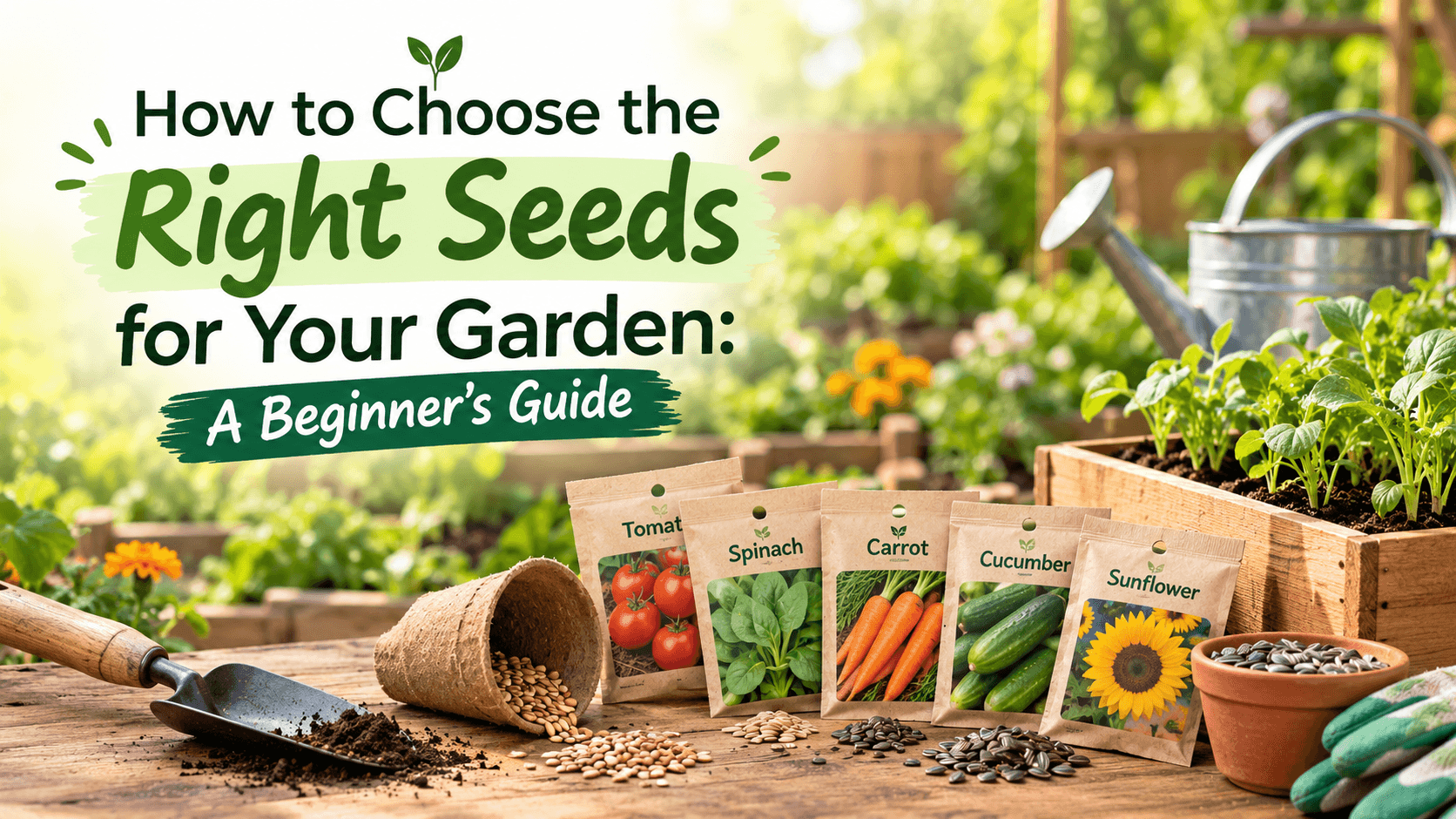
Starting a garden can be exciting, especially when you see all the colourful flower, vegetable, herb, and fruit seeds available. But for beginners, choosing the right seeds can sometimes feel confusing. Not every seed is suitable for every garden, climate, season, or growing space.
Choosing the right seeds from the beginning can make gardening easier and increase your chances of growing healthy and productive plants. Whether you are planning a balcony garden, terrace garden, kitchen garden, or a larger outdoor garden, understanding a few basic things can help you make better seed choices.
Understand Your Growing Space
Before buying seeds, take a good look at your garden space. Consider whether you are growing plants in an open garden, pots, containers, or grow bags.
The amount of available space can influence which plants you should choose. Some plants need plenty of room to spread, while others can grow comfortably in small containers. If you have limited space, compact vegetables, herbs, and flowering plants can be a practical choice.
Also consider how much sunlight your growing area receives during the day. Some plants need several hours of direct sunlight, while others can grow better in partial shade.
Choose Seeds According to Your Climate
Your local climate plays an important role in seed selection. Temperature, humidity, rainfall, and seasonal changes can all affect seed germination and plant growth.
Before purchasing seeds, check whether they are suitable for the growing conditions in your area. Seeds that are well suited to your climate generally have a better chance of germinating and developing into healthy plants.
For beginners, starting with plants that naturally perform well in your local conditions can make gardening more manageable.
Consider the Growing Season
Different plants grow best during different seasons. Some seeds prefer warm weather, while others perform better during cooler months.
Choosing seeds according to the current season can improve germination and plant growth. Before sowing, check the recommended sowing season mentioned on the seed packet.
Planning your garden around the growing season also helps you avoid wasting seeds by planting them when conditions are unsuitable.
Check the Seed Packet Carefully
The seed packet contains important information that beginners should always read before planting. Look for details such as the recommended sowing season, planting depth, spacing, sunlight requirements, and expected growing period.
Also check the seed quality information, packaging date, and other details provided by the seller or manufacturer.
Understanding this information before sowing can help you create the right conditions for successful germination.
Choose Fresh and Good-Quality Seeds
Seed quality can have a major impact on germination. Always purchase seeds from a reliable source and check the packaging carefully.
Avoid using seeds that are damaged, improperly stored, or past their recommended viability period. Good-quality seeds stored under suitable conditions are more likely to provide better germination results.
If you are buying several varieties, label and store them properly so you know exactly what you have planted.
Start With Easy-to-Grow Plants
If you are a beginner, you don’t need to start with difficult or highly sensitive plants. Choosing easy-to-grow varieties can help you gain confidence and learn basic gardening skills.
Herbs, leafy vegetables, radish, beans, marigolds, and several other commonly grown plants can be good options depending on your season and local growing conditions.
Once you become comfortable with basic sowing, watering, and plant care, you can gradually experiment with more varieties.
Think About What You Actually Want to Grow
Before buying seeds, decide what you want from your garden. Do you want fresh vegetables for your kitchen, colourful flowers, herbs for cooking, or plants simply to make your space greener?
Making a simple list can prevent unnecessary purchases and help you plan your garden more efficiently.
For a kitchen garden, you might focus on vegetables and herbs that you regularly use. For a flower garden, choose varieties based on your preferred colors, flowering season, and available sunlight.
Consider Seed Spacing and Plant Size
A small seed can eventually become a large plant. This is why it is important to understand the mature size of a plant before choosing seeds.
Large plants may require more space between plants, while compact varieties can be suitable for containers and smaller gardens.
Proper spacing allows plants to receive enough sunlight and air circulation and reduces unnecessary competition for water and nutrients.
Prepare the Right Growing Medium
Choosing good seeds is only the first step. Seeds also need a suitable growing environment to germinate successfully.
The growing medium should provide adequate moisture, drainage, and air around the developing roots. For container gardening, gardeners can create a suitable potting mix using soil and organic matter along with materials such as cocopeat.
A Cocopeat Block can be used as a component of suitable growing mixes to help create a lighter and moisture-retentive growing medium.
Choose the Right Container for Your Seeds
If you are growing plants in containers, choose a container that matches the plant’s growth requirements. The container should have enough space for root development and proper drainage.
For vegetables, flowers, and other plants, Geo Fabric Plant Grow Bags can be a practical option for container gardening. Their fabric structure allows air movement around the root zone and helps excess water drain away.
Choosing the correct container size is especially important as plants grow larger and develop stronger root systems.
Don’t Buy More Seeds Than You Need
Beginners often get excited and purchase many different seed varieties at once. While experimenting is part of the fun, buying too many seeds can lead to unnecessary waste.
Start with a manageable number of varieties. Learn how each plant grows, understand its requirements, and then expand your collection.
This approach allows you to gain practical gardening experience without making the process overwhelming.
Store Your Seeds Properly
Proper storage can help maintain seed quality until you are ready to sow them. Keep unopened or leftover seeds in a cool, dry place away from direct sunlight and excess moisture.
After opening a packet, seal it properly and label it with the plant name and relevant details. Avoid storing seeds in damp locations because moisture can affect their quality.
Give Your Seeds the Right Start
Once you have selected your seeds, follow the recommended sowing instructions carefully. Plant seeds at the appropriate depth and provide suitable moisture.
Avoid flooding the soil after sowing. Excessive water can disturb seeds or create unfavorable conditions for germination.
Keep the growing medium consistently suitable for the particular plant and monitor the seedbed regularly. Once seedlings emerge, provide them with the sunlight and care they need.
Support Your Plants After Germination
Successful germination is only the beginning. Once your seedlings start growing, they need continued care.
Provide appropriate sunlight, water them according to their requirements, remove weeds, and monitor them for pests or diseases. As plants grow, they may also need additional nutrition.
Organic soil amendments such as Neem Cake can be incorporated into a suitable gardening routine according to recommended application practices. For additional plant and soil nutrition, products such as Katyayani Humic & Fulvic Acid Fertiliser can also be used according to the product label and recommended dosage.
Learn From Every Growing Season
Not every seed will grow perfectly, and that is completely normal for a beginner. Gardening is a learning process.
Keep track of which seeds germinated well, which plants performed best, and what problems you experienced. Over time, this information will help you understand which varieties work best in your garden.
Don’t be discouraged if some plants fail. Every growing season gives you an opportunity to learn something new.
Final Thoughts
Choosing the right seeds is one of the most important steps in starting a successful garden. By considering your growing space, local climate, season, sunlight, plant size, and personal gardening goals, you can make better choices and avoid common beginner mistakes.
Start small, choose good-quality seeds, prepare a suitable growing medium, and give your plants consistent care. With patience and practice, you can gradually build a healthy and productive garden filled with plants you enjoy growing.
Remember: The right seed, the right season, and the right care can turn a small garden into something truly rewarding.