
Starting a garden is exciting, but beginners often make a few simple mistakes that can affect plant growth and overall garden health. The good news is that most gardening mistakes are easy to avoid once you understand what your plants actually need.
Whether you are growing plants in pots, grow bags, a balcony garden, terrace garden, or kitchen garden, learning the basics can save you time, effort, and money.
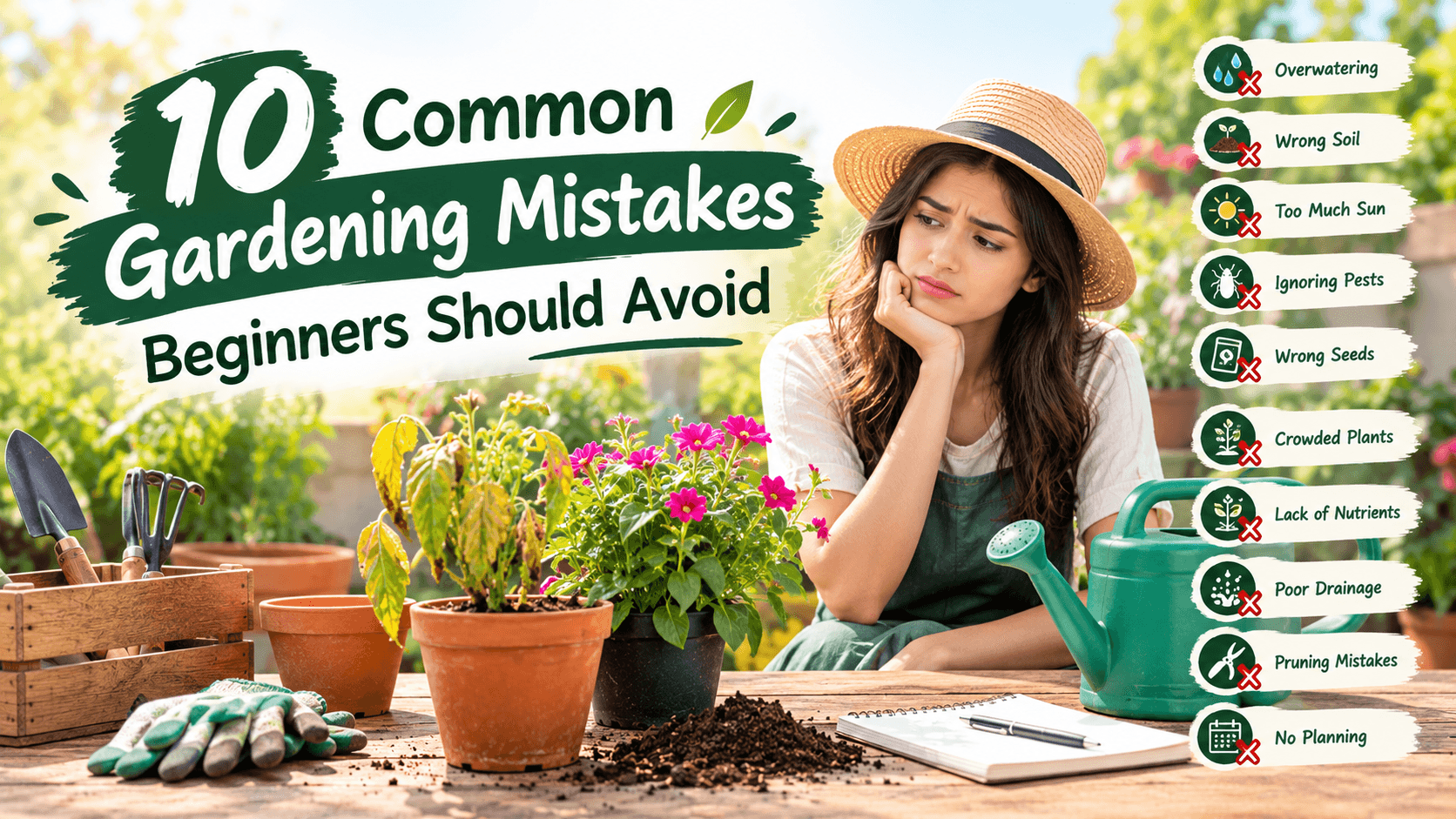
Here are 10 common gardening mistakes beginners should avoid to give their plants a healthier start.
1. Overwatering Your Plants
One of the most common mistakes beginners make is giving plants too much water. Many new gardeners believe that watering plants frequently will help them grow faster, but excessive moisture can create problems for the roots.
When soil remains waterlogged for long periods, roots may not get enough oxygen. This can affect root health and plant growth.
Instead of watering plants according to a fixed schedule, check the soil moisture first. Water according to the plant’s requirements, weather conditions, and growing medium. Also make sure your pots or grow bags have proper drainage.
2. Not Giving Plants Enough Sunlight
Sunlight is essential for photosynthesis and healthy plant development. However, placing a plant in the wrong location can affect its growth, flowering, and productivity.
Some plants need several hours of direct sunlight, while others prefer partial shade. Before planting, understand the light requirements of each plant.
Avoid placing sun-loving plants in a dark corner simply because the location is convenient. Choose the growing location according to the plant’s needs.
3. Using Poor-Quality Soil
Even the best seeds and plants can struggle if the growing medium is poor. Compacted, nutrient-deficient, or poorly drained soil can restrict root development.
Beginners should focus on creating a healthy growing medium with suitable soil, organic matter, and other appropriate materials.
For container gardening, cocopeat can be included in a suitable potting mix to help create a lighter growing medium with good moisture retention. The important thing is to maintain a balance between moisture retention and drainage.
4. Using Too Much Fertiliser
Another common mistake is assuming that more fertiliser means faster growth. In reality, excessive fertilisation can damage plants and create nutrient imbalances.
Different plants have different nutritional requirements. Before applying any fertiliser, read the product instructions and follow the recommended dosage.
If your plants are not growing well, don’t immediately add more fertiliser. First check other factors such as sunlight, watering, drainage, pests, and soil condition.
5. Ignoring Drainage
Good drainage is essential for healthy roots. When excess water cannot escape, the growing medium can remain too wet for too long.
This is particularly important when growing plants in containers and grow bags. Make sure your containers have adequate drainage holes.
Fabric grow bags can also be a practical option for container gardening. A Geo Fabric Plant Grow Bag can provide a breathable growing environment while allowing excess water to drain through the fabric.
6. Planting Without Considering the Season
Every plant has its preferred growing conditions. Sowing seeds or planting seedlings in an unsuitable season can result in poor germination, weak growth, or plant stress.
Before buying seeds, check the recommended sowing season and temperature requirements. Planning your garden according to the season can significantly improve your chances of success.
For beginners, starting with plants that are naturally suited to the current season is often easier than trying to grow plants outside their preferred conditions.
7. Planting Too Close Together
It is tempting to plant many seedlings close together, especially when you have limited space. However, overcrowding can create competition for sunlight, water, nutrients, and root space.
Plants also need adequate air circulation. When plants are too close together, humidity around the foliage can increase and make it more difficult to maintain a healthy growing environment.
Always check the recommended spacing for the particular plant and give it enough room to develop.
8. Ignoring Pests Until the Problem Gets Serious
Beginners sometimes notice pests only after significant damage has already occurred.
Make it a habit to inspect your plants regularly. Check the leaves, stems, and undersides of leaves for insects, holes, spots, discolouration, or unusual growth.
Early detection makes pest management much easier. If you notice a problem, identify the pest before choosing a treatment and always follow the recommended instructions for any garden product you use.
9. Forgetting to Remove Weeds and Dead Plant Parts
Weeds compete with garden plants for water, nutrients, sunlight, and space. If they are left unchecked, they can quickly take over a growing area.
Similarly, dead or diseased leaves and flowers can make the garden untidy and may contribute to poor garden hygiene.
Remove weeds regularly and trim dead or damaged plant parts when appropriate. Keeping the garden clean can make it easier to observe your plants and notice potential problems early.
10. Expecting Instant Results
Perhaps the biggest mistake beginners make is expecting plants to grow overnight.
Gardening requires patience. Seeds need time to germinate, seedlings need time to establish their roots, and flowering or fruiting plants may take weeks or months to reach their productive stage.
Instead of focusing only on fast results, observe your plants and learn from their growth. Keep track of what works and what doesn’t. With experience, you will become better at understanding your garden’s needs.
Bonus: Don’t Ignore Soil Health
Plant care is not only about watering and fertilising. The condition of the soil also plays an important role in long-term garden health.
Organic soil amendments can be included in a suitable gardening routine to support soil quality. Neem Cake, for example, is commonly used as an organic soil amendment.
Similarly, Katyayani Humic & Fulvic Acid Fertiliser can be included in a plant and soil nutrition routine according to the product’s recommended dosage and application instructions.
Remember that no single product can replace proper sunlight, watering, drainage, and regular plant care
How Beginners Can Avoid These Mistakes
The easiest way to avoid common gardening mistakes is to understand your plants before you start growing them.
Before planting, check:
- How much sunlight does the plant need?
- How often should it be watered?
- What type of soil or growing medium is suitable?
- How much space will the plant need?
- What is the recommended growing season?
- Does the plant require additional nutrition?
- What pests or diseases commonly affect it?
Keeping these basic requirements in mind can make gardening much easier.
Final Thoughts
Gardening is a learning experience, and making a few mistakes along the way is completely normal. The key is to understand what went wrong and improve your approach.
Avoiding overwatering, poor drainage, excessive fertilisation, insufficient sunlight, overcrowding, seasonal planting mistakes, and ignoring pests can help create a healthier growing environment.
Start small, observe your plants regularly, and give them the right combination of sunlight, water, healthy soil, nutrients, space, and care.
With patience and consistent attention, even a beginner can build a beautiful and healthy garden.